究极之赏
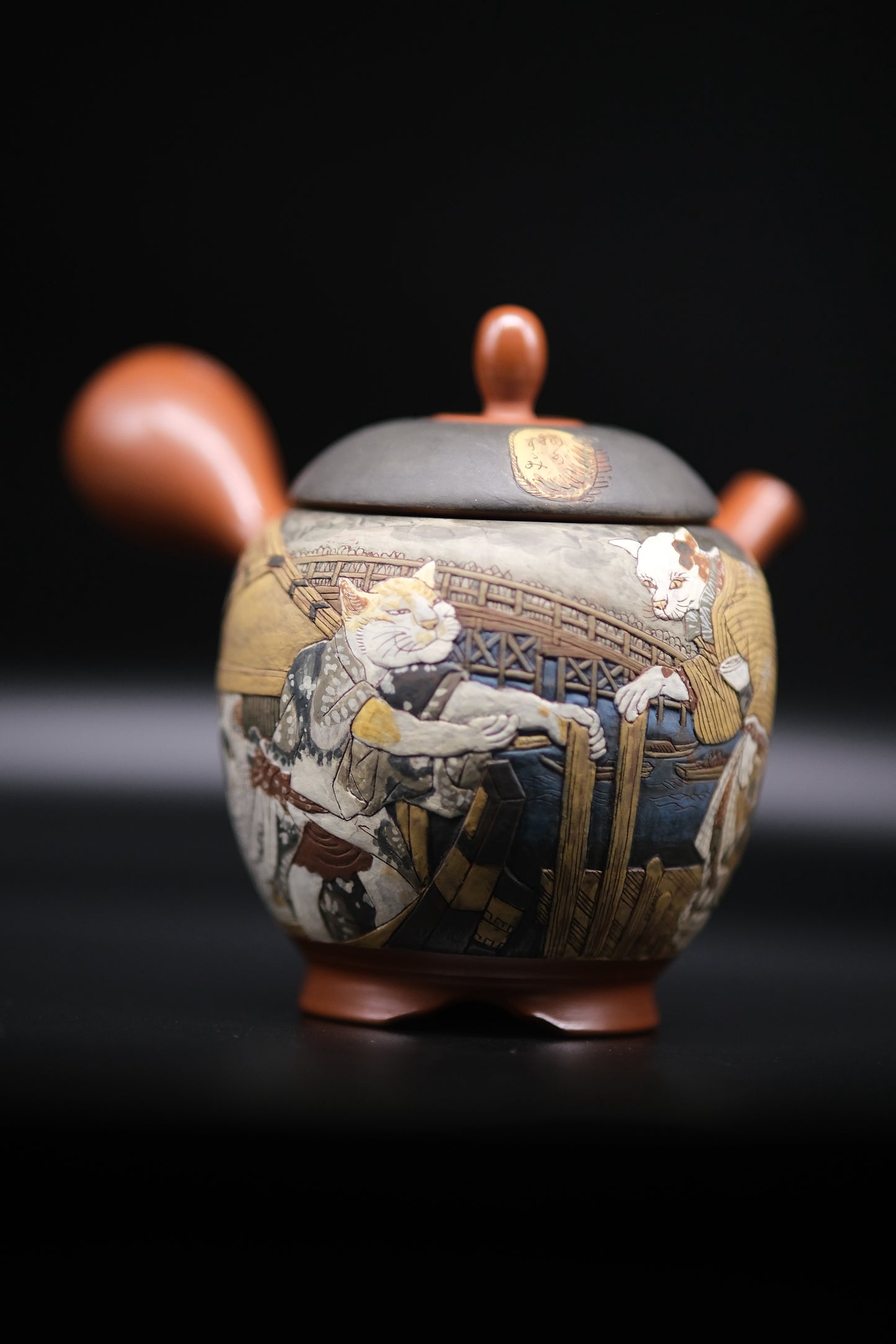
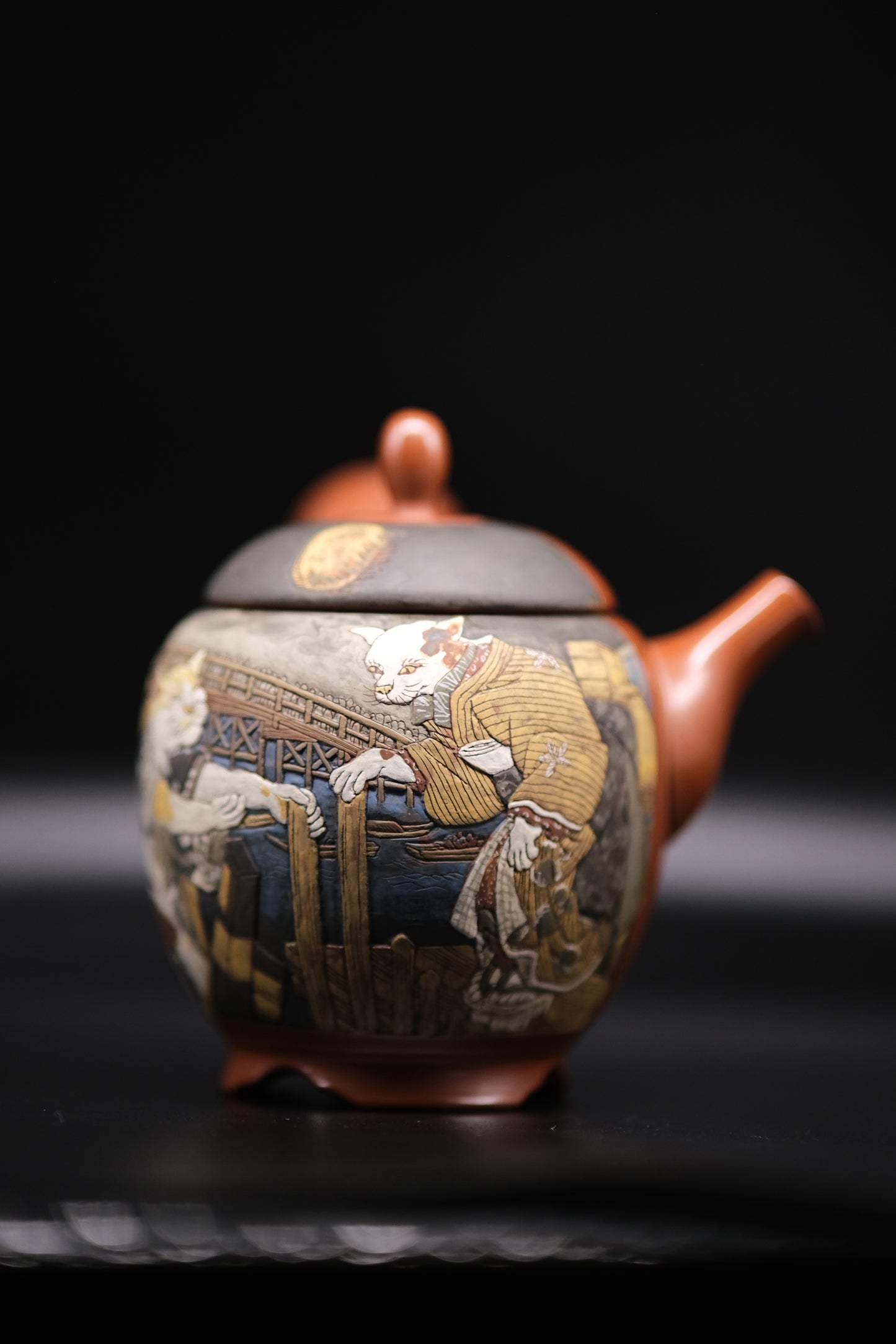
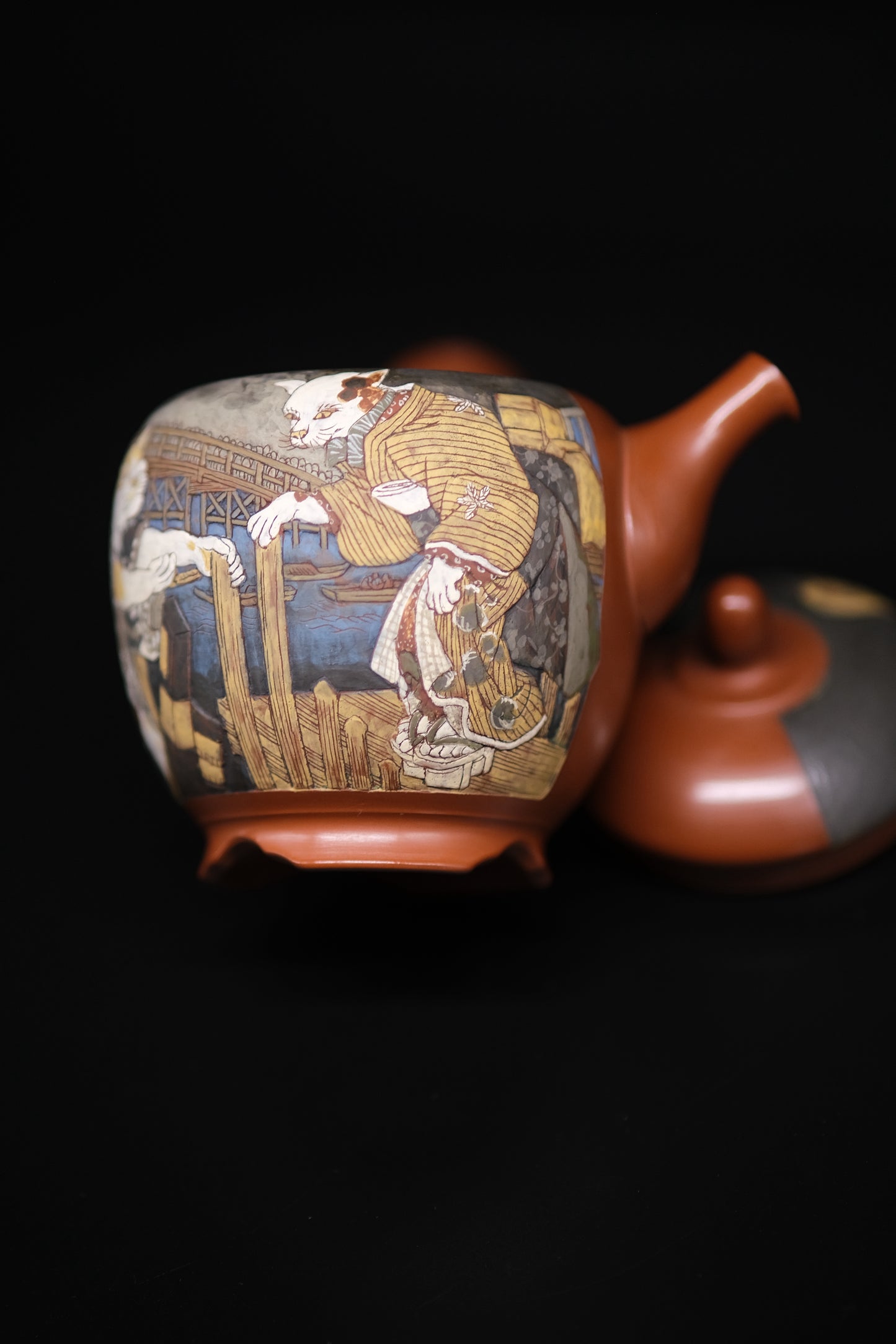
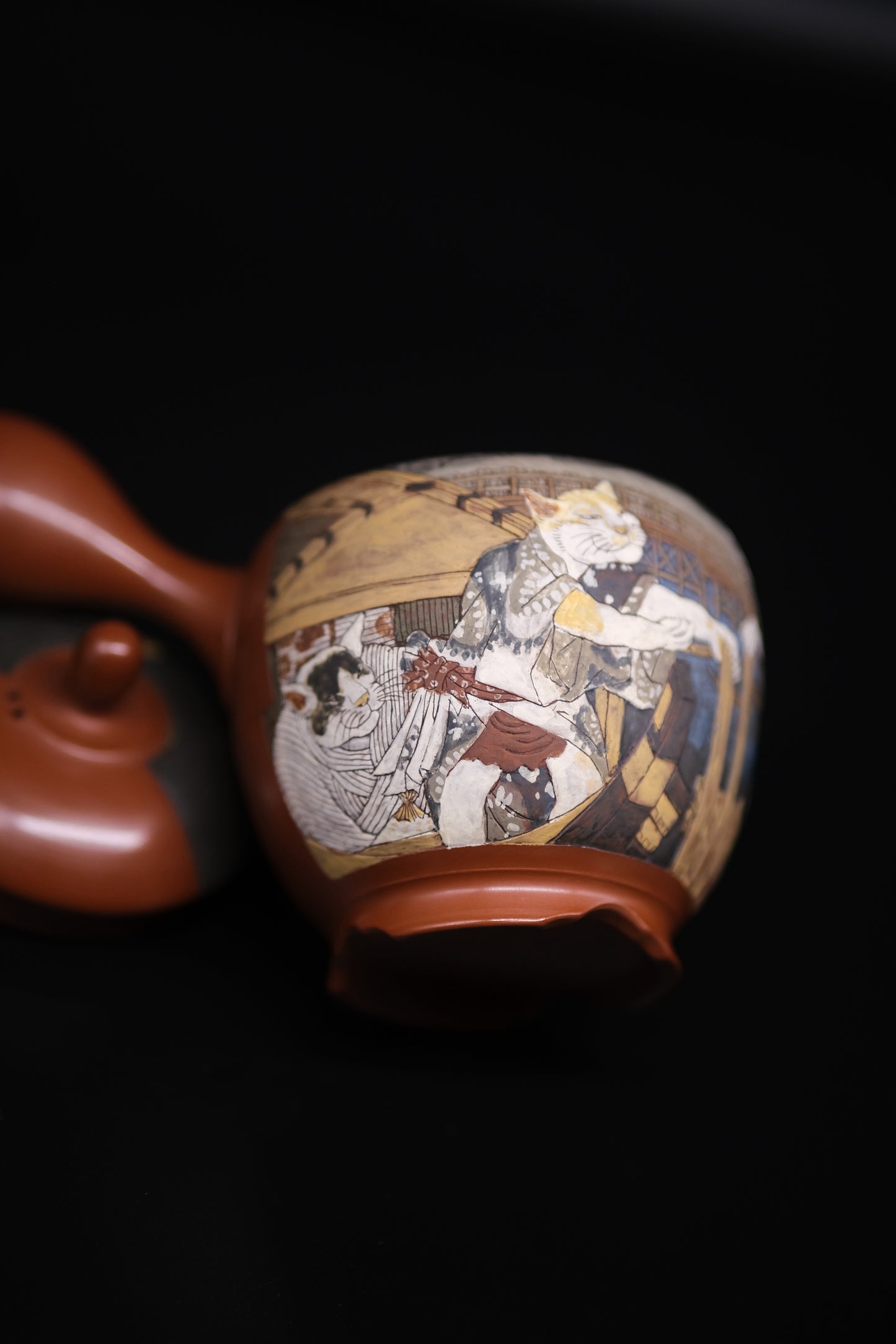
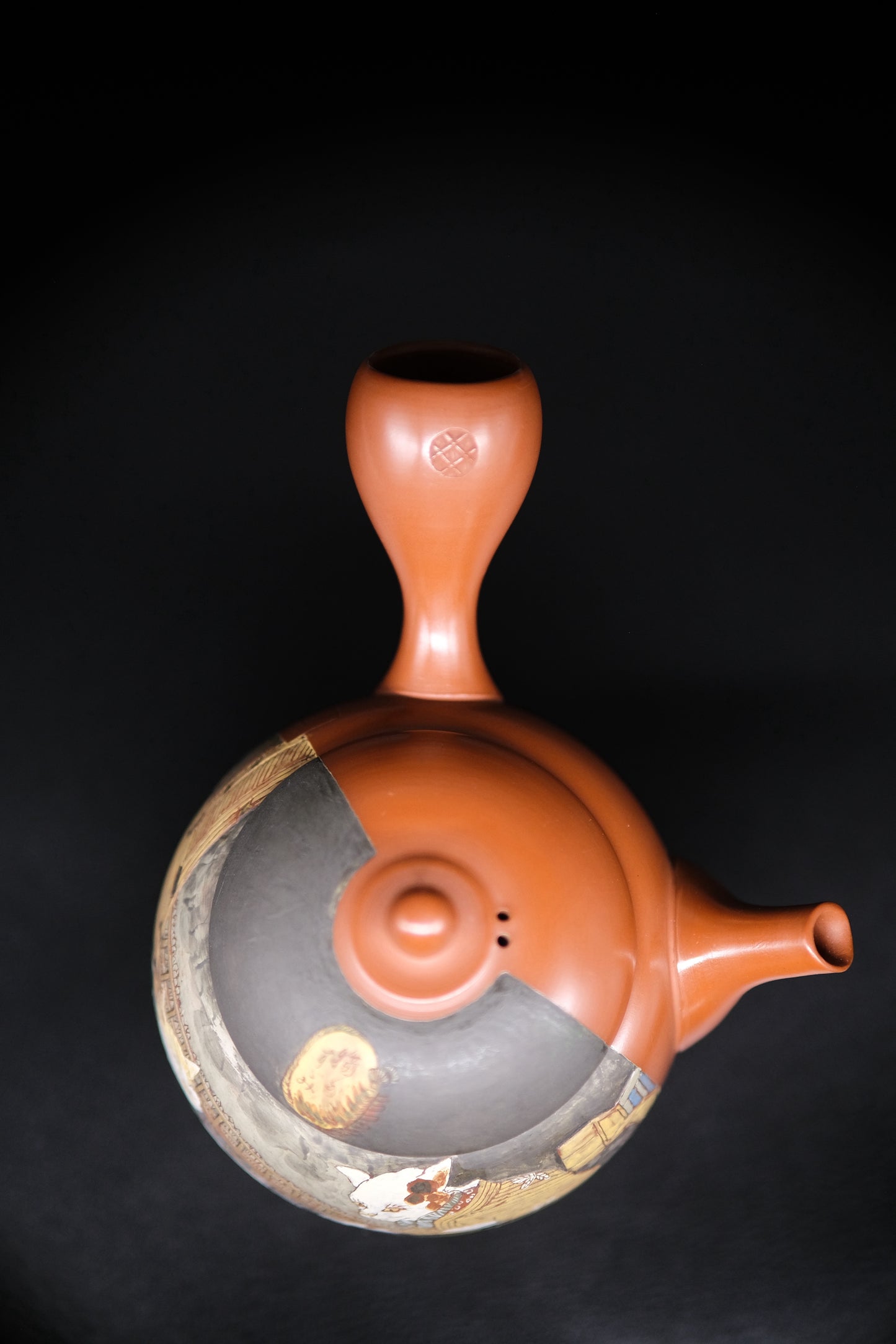
Yoshikawa Kotodo 50th Anniversary Work "Cooling Cat"
Yoshikawa Kotodo 50th Anniversary Work "Cooling Cat"
Couldn't load pickup availability
About the Artwork:
"Cats Enjoying the Cool Air"
Artist: Utagawa Kuniyoshi (Japan)
Nishiki-e on a fan format
21.6 cm * 28.8 cm (Original size)
1830s (Tenpo era)
Collection of the Tokyo National Museum
Under the leadership of Abe Masahiro, the Treaty of Amity and Commerce between Japan and the United States was signed. He championed enlightened policies, establishing institutions such as the Naval Training School and the Institute for Western Learning, effectively guiding Japan towards a major shift in policy by opening up the country. The black robe of the falconer on the right bears the kana "かん" (sound: Kan), alluding to the 13th Tokugawa Shogun Iesada (1824-1858), who was nicknamed "Epileptic Shogun" due to his poor health. "かん" is the Japanese reading of "epilepsy" (痫). As a common artist with little political affiliation, Utagawa Kuniyoshi's works used lighthearted forms to criticize the shogunate's autocratic rule, embodying the optimistic character of Edo citizens.
Although the shogunate pursued a policy of national isolation, Western influence gradually entered Japan. Utagawa Kuniyoshi meticulously collected hundreds of European copperplate prints to study Western techniques, publishing many ukiyo-e that imitated perspective and realism.
If Utagawa Kuniyoshi's warrior prints, satirical paintings, and ghost and mythological stories reveal a certain mischievousness, then the small animals he enjoyed painting display more of an unconventional charm.
Utagawa Kuniyoshi was particularly known for his love of cats and his skill in depicting them in all their forms with refined brushwork (Figure 24). He not only kept cats throughout his studio workshop but often held a cat while painting. Cats were a unique cultural phenomenon in Japan. During the Edo period, many stories circulated among the common people about cats possessing humans, and superstition and prejudice gave cats a more mysterious aura. Literary works and daily language contained a wealth of cat-related content. Therefore, Utagawa Kuniyoshi was also adept at anthropomorphizing cats, using them as a vehicle to metaphorically represent reality and depict the daily lives of common folk.
Share